

Blog
Top 10 Facts About Tyrannosaurus Rex

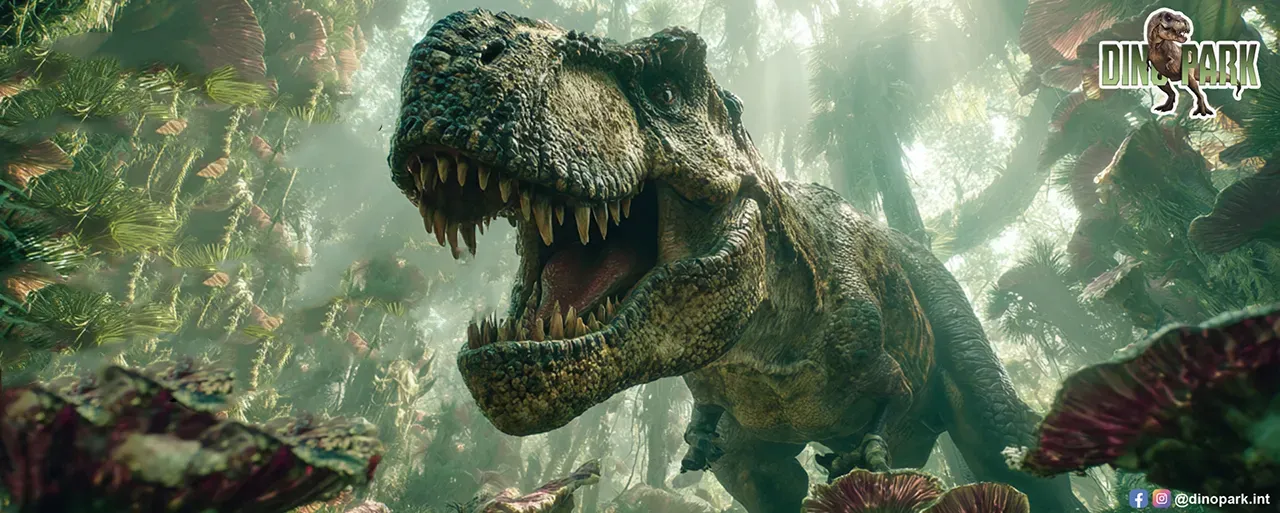
Most people only know about T. Rex from what Hollywood has shown. The reality is much more interesting - and, in some places, completely unexpected.
- The name means "King of the Tyrant Lizards"
- Teeth the size of bananas
- Better vision than an eagle
- Grew by 700 kg per year
- A bite stronger than any animal on Earth
- Tiny arms - not a weakness, but a mystery
- Lived for only 28 years
- Was warm-blooded
- Probably had feathers
- Its closest living relative is the chicken
"Tyrannosaurus" comes from the Greek words tyrannos - tyrant, and sauros - lizard. "Rex" - is Latin for "king". The name was coined by scientist Henry Osborn in 1905 - and it hit the bullseye.
Inside a T. rex's mouth were 50 to 60 teeth, each about 20 cm long. They were serrated and thick - looking more like chisels than knives. This allowed it not only to slice flesh but also to crush bones.
Teeth were constantly replaced throughout its entire life - just like in sharks. T. rex never suffered from cavities.
In movies, T. rex is often depicted as blind - "it can't see you if you don't move". This is not true. The tyrannosaur's eyes faced forward, giving it excellent binocular vision - better than that of birds of prey.
A baby T. rex was roughly the size of a turkey. However, by age two it weighed about 30 kg, and by age 14 - nearly 2 tons. During its peak growth period, the tyrannosaur gained about 700 kg a year - almost 2 kg every single day.
T. rex's bite force ranged between 35,000 and 57,000 Newtons - an absolute record among all land animals in the history of life on Earth. A lion's bite is around 4,500 N, and a crocodile's is about 16,000 N.
The tiny front limbs of T. rex were only about 90 cm long, unable to even reach its mouth. Yet they can't be called "useless": each arm could hold a load of up to 200 kg - more powerful than any arm muscle of a modern human.
Scientists determine the age of dinosaurs by the growth rings inside their bones - much like trees. The oldest known T. rex lived to be just 28 years old.
For a long time, dinosaurs were thought to be sluggish and cold-blooded, like crocodiles. Modern science has debunked this: isotope analysis of bones showed that T. rex maintained a constant body temperature regardless of the external environment.
This explains both its rapid growth rate and active lifestyle. A cold-blooded animal of that size wouldn't have been able to develop so quickly.
Many of T. rex's relatives - such as Yutyrannus from China - were covered in feathers. While skin patches showing scales have been found for Tyrannosaurus itself, they only come from certain parts of the body. The question remains open.
In 2008, scientists analyzed proteins from a fossilized T. rex bone dating back 68 million years. The result: the closest living relatives of the tyrannosaur turned out to be birds - and first and foremost, the chicken.
The next time a child eats chicken wings - remind them: they are eating a distant relative of the most terrifying predator in Earth's history.
Want to see a T. Rex in person?
The DinoXPark collection features a full-scale animatronic Tyrannosaurus - it moves, makes sounds, and reacts as you get close. It is a completely different feeling than reading about it in a book.
Find out about exhibitions →